

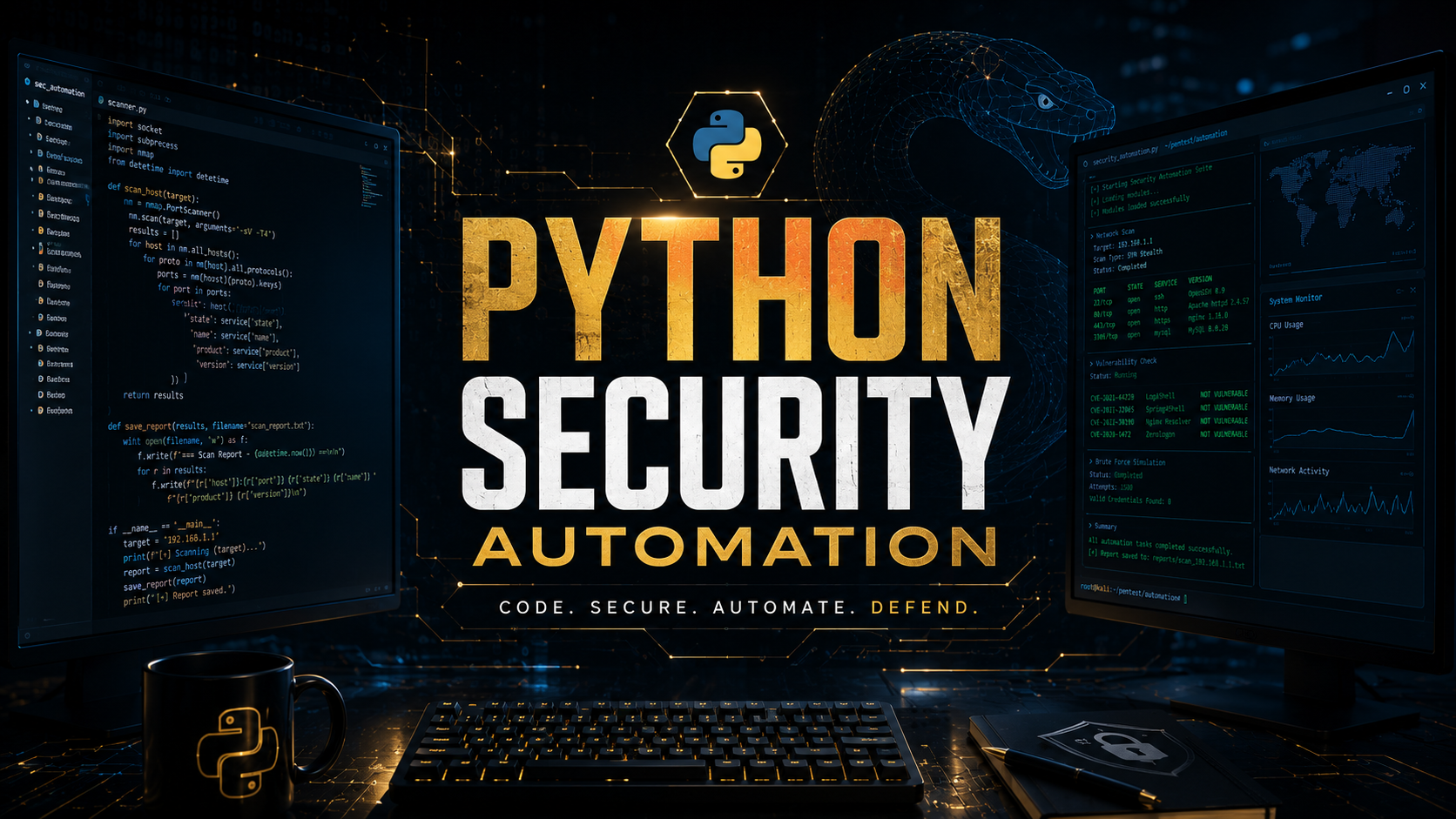
Harness the raw execution power of Python to develop custom automation tools, advanced network analyzers, and intelligent alert scripts. This track focuses heavily on programmatic security engineering tasks.
### COURSE OVERVIEW
Manual verification checks fail to scale across sprawling modern network perimeters, demanding customized automated processing solutions. This specialized development course is engineered to guide non-programmers from foundational syntax logic blocks straight into writing high-performance multi-threaded data scraping and vulnerability tracking software. You will learn to manipulate data formats, interface with raw sockets, and build internal tools to optimize local asset defense metrics.
### WHAT YOU'LL LEARN:
* Develop clear logical control loops and complex data structures using core Python coding methodologies variables.
* Manipulate text-based system records logs and format data structures smoothly by integrating advanced Regular Expressions (Regex).
* Manage hardware input/output streams, stream server configurations parameters, and write robust error tracking exceptions routines.
* Develop custom multi-threaded network scanners capable of scanning thousands of target ports simultaneously inside labs.
* Build automated scrapers to parse target metadata fields out of raw web application headers and text layouts.
* Write custom scripts to execute automated security configuration verifications across distributed remote target systems interfaces.
* Connect custom scripts to centralized database nodes to record threat logs parameters for instant administrative visibility.
### COURSE REQUIREMENTS:
* Absolute zero prior software programming experience is required; modules initiate from fundamental logic arrays.
* Working desktop computer platform running any modern operating system (Windows environment or Linux distribution).
* Strong interest in replacing manual clicking operations with optimized programmatic code instructions execution routines.
Detailed module-wise learning path for this course:
Find answers to common questions about this course:
"Automated web communication auditing scripts parameters are precise. Error tracking models are highly scalable."
"Raipur Shankar Nagar best environment for learning programmatic automation applications tracking scripts layouts configurations."
"Data data frames extraction using regular variables built high confidence during manual parsing pipelines check loops."
"Excellent short development track for technical scholars who want programmatic control over infrastructure monitoring systems."
"Network communication data parsing codes required nested loops focus par execution results are completely transparent."
|
Registration Fee
₹499/-
|
|
| Course Fee: | ₹5,999/- |
| Duration: | 8 - 12 Months |
| Instructor: | Kian Sir |
| Mode: | Online / Offline |
| Labs: | Flexible / Live Labs |
| Certificate: | Yes (Verified) |
